RECENT EVENTS
Saturday, April 22 and Sunday, April 23, 2017
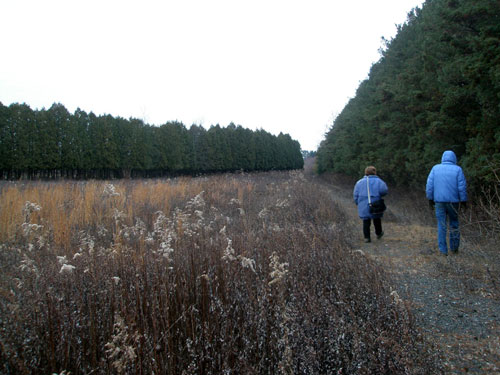
Two crews tidied up Kingston on Earth Day weekend on both the Franklin and South Brunswick sides. A six person team concentrated on Laurel Avenue and the environs of Rockingham, while twenty-seven volunteers cleaned up the areas along Railroad and Greenwood Avenues, Ridge Road, and Divison Street. We are grateful to all these good folks for giving their time and energy to make the environment safer and more beautiful for all!
Rockingham Crew:


South Brunswick Crew:


And a big thank you to Scott of The Sentinel, who turned out on a Sunday to document our activities. His "action shots" may be viewed here: Photos by Scott of The Sentinel
Sunday, October 20, 2013
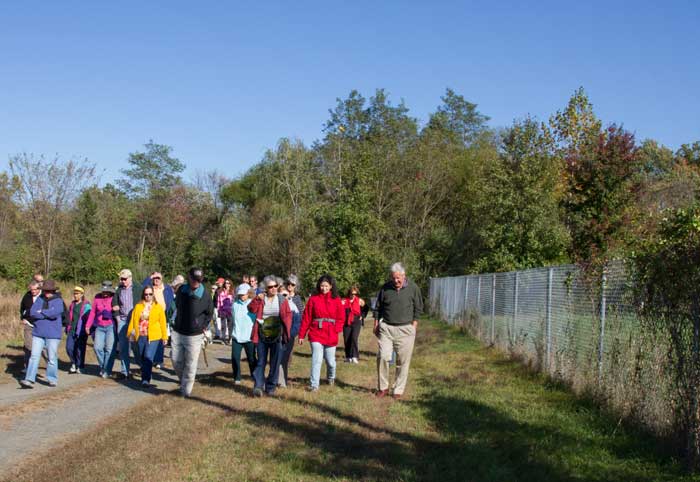
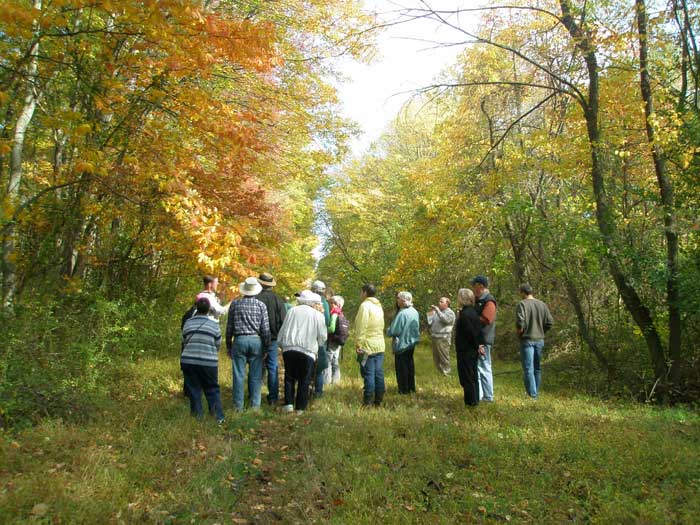
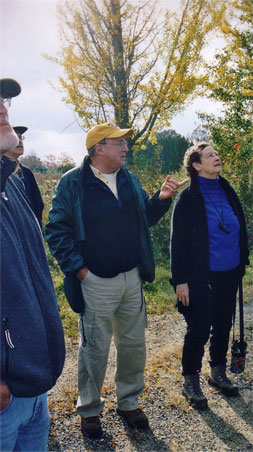
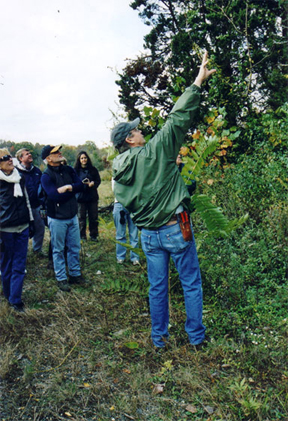
Rick Henkel (at far right) and fall foliage walkers--Photo by Jonathan Michalik
In celebration of this 100th anniversary year of the founding of Princeton Nurseries, Rick Henkel led a walk through the Nurseries' Kingston site. Rick was formerly Sales Manager for Princeton Nurseries, where he worked for 32 years. After leaving the Nurseries, he founded Princeton Horticultural Services, which he continues to run. Rick has an extraordinary knowledge of trees, and knows the Kingston Site and its trees intimately.
View a gallery of photos taken by Jonathan Michalik: Fall Foliage Walk 2013
ANNUAL MEETING AND MOVIE--“Crash: A Tale of Two Species”
Wednesday, May 22, 2013
For those who were unable to join us, the film "Crash: A Tale of two Species" is available from Netflix. It explores the fascinating, endangered relationship between the red knot, a South American shorebird which flies each year to the Arctic to mate, and the horsehoe crab, whose eggs fuel the most grueling portion of the red knot's journey north.
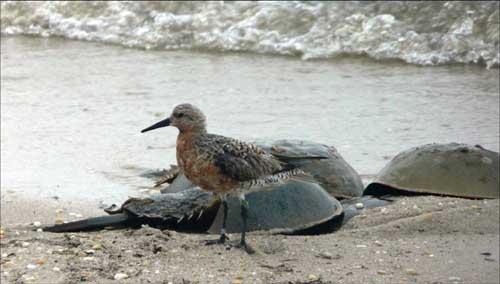
Courtesy of Conserve Wildlife
But now that humans are using the horseshoe crab for fishing bait and for medical purposes (its blue blood is pervasively used to test intravenous drugs, vaccines, and medical devices for bacterial contamination--see http://www.horseshoecrab.org/med/med.html for more information) the relationship has become increasingly endangered.
Maria Grace, the Education and Outreach Manager of Conserve Wildlife (Conserve Wildlife) fielded many questions raised by the documentary. Despite grim challenges to both species, there is some hopeful news--this short Star Ledger video provides some post-Sandy coverage: Researchers optimistic about Delaware Bay horseshoe crab spawn and shorebird migration
December 16, 2012

PHOTOGRAPH BY BRENDA J. JONES
Trustee and Count leader Karen Linder reports that all told, the Kingston segment recorded 43 species and 2624 birds. Highlights of the day were:
**Two large flocks of snow geese flying over the seedbeds
**Three sightings of a single eagle (might be the same one or different birds--likely our local pair), including watching him/her bring a leafy stick to the new nest that is being built to replace the nest and tree lost to Sandy
**Two brown creepers
**Some very cooperative golden-crowned kinglets that showed themselves nicely
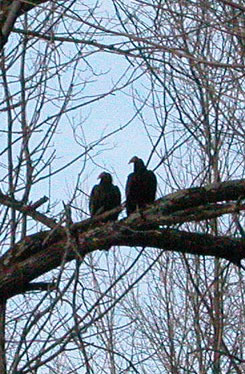
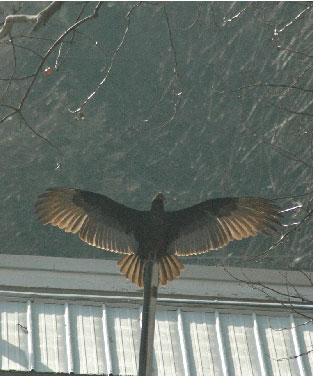
Missing were large numbers of yellow-rumped warblers (we saw only TWO!), and no cedar waxwings or bluebirds for this count. Robins were reduced in number relative to some years. Also missing were the black vultures we have seen in previous years. It was not a good day to be aloft, so perhaps they "slept in!"
| RICCIARDI TRACT PRESERVED! | |
| After more than two years of community effort, fundraising and litigation, 14 wooded acres on the ecologically-sensitive Princeton Ridge have been permanently preserved by a partnership of public agencies and four nonprofits - New Jersey Conservation Foundation, Friends of Princeton Open Space, Stony Brook-Millstone Watershed Association and Kingston Greenways Association. The partners purchased the Ricciardi property on August 25th, 2011. Link here to the full story: Ricciardi News Release | 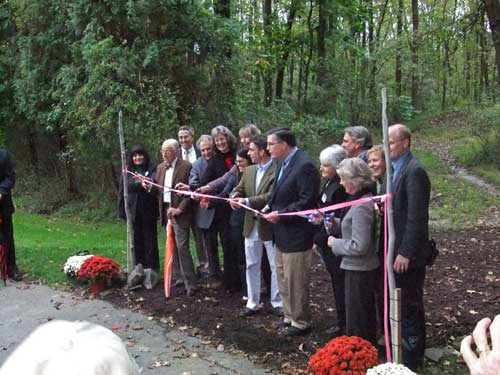 Ricciardi Tract Dedication, October 2, 2011 Photo by Henry Horn |
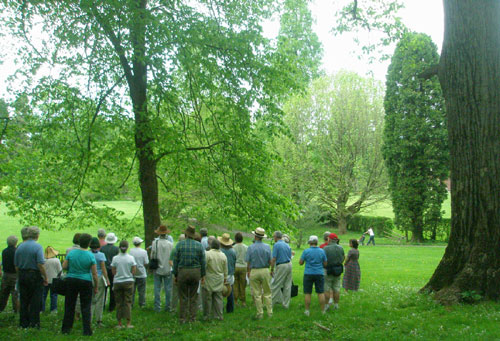
| KGA FALL FOLIAGE WALK Saturday, October 15, 2011 Naturalists Henry and Betty Horn led forty participants on a walk through the Mapleton Preserve. Betty, an avid botanist with an intimate knowledge of local wildflowers, plucked asters, Queen Anne's Lace, goldenrod, porcelain-berry, mugwort, and other attractions from field and woodland, explaining their features, life cycles, and strategies for survival and propagation. Henry shared his learning and love of trees, and helped us see the half man-made, half natural environment of the Princeton Nursery Lands as a theater of intense competition for light, space, and life. |
Henry Horn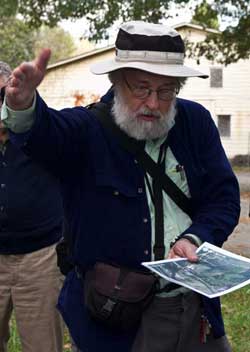 |
Betty Horn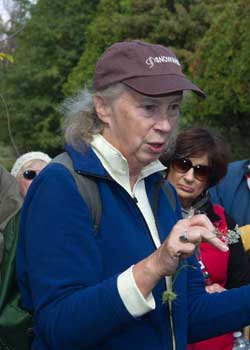 |
Photographer Jonathan Michalik documented the day: Fall Foliage 2011 Gallery 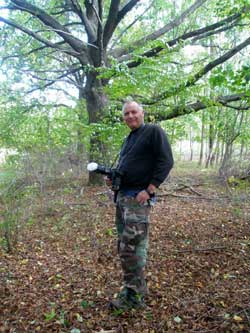
|
KGA ANNUAL MEETING & PROGRAM--
"THE D&R CANAL, GEM OF CENTRAL NEW JERSEY”
Tuesday, May 24th, 2011
Canal author and historian Linda J. Barth spoke to a rapt crowd about the D&R Canal, illustrated by an array of vintage slides depicting the Canal from end to end.
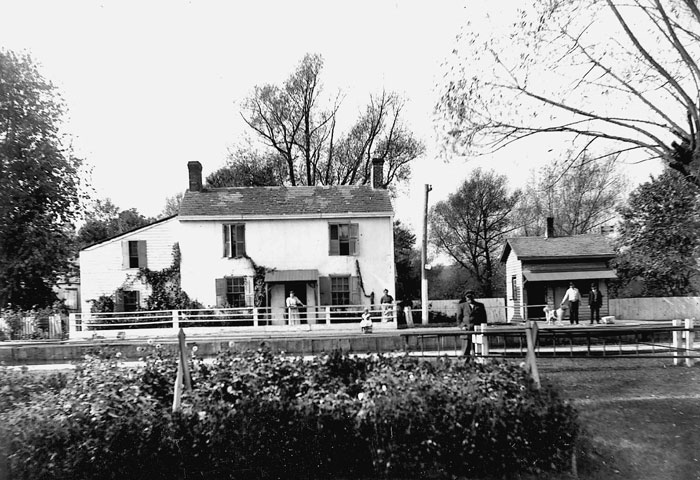
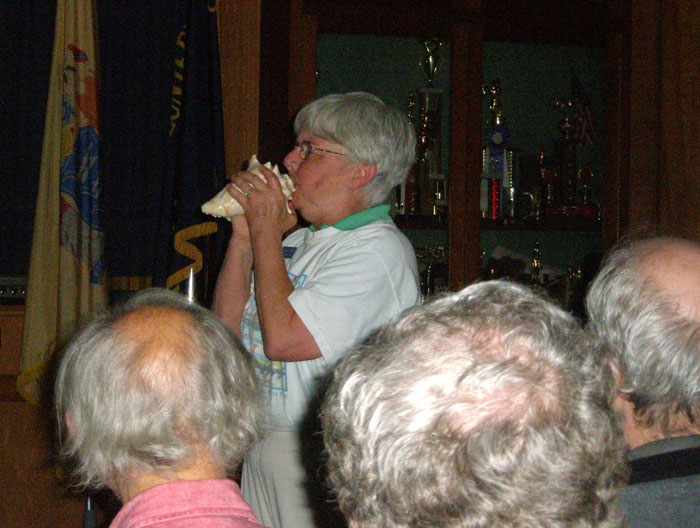
Below, Linda Barth demonstrates the method for giving a locktender advance notice of a canal boat's arrival.
More about our speaker's background and her books is available at http://www.lindajbarth.com/
ANIMAL AMBASSADORS
Sunday, April 2, 2011
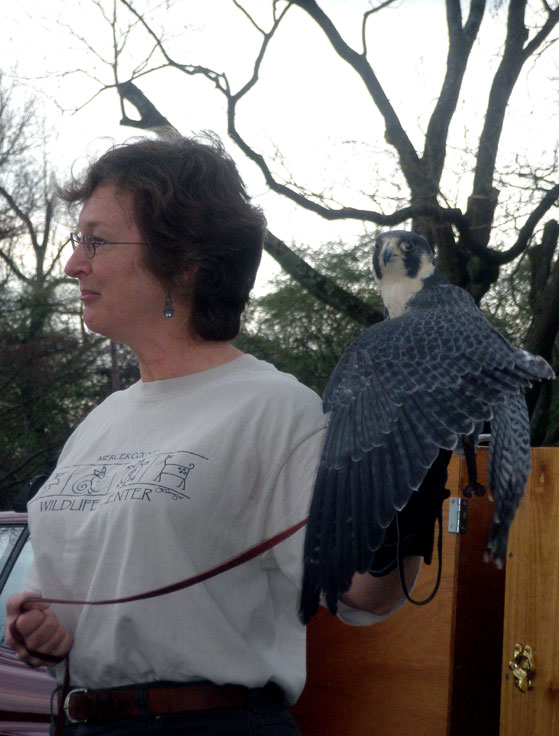
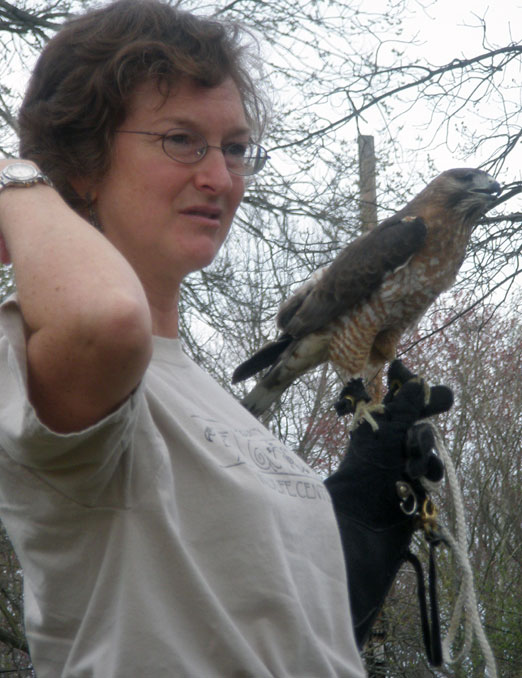
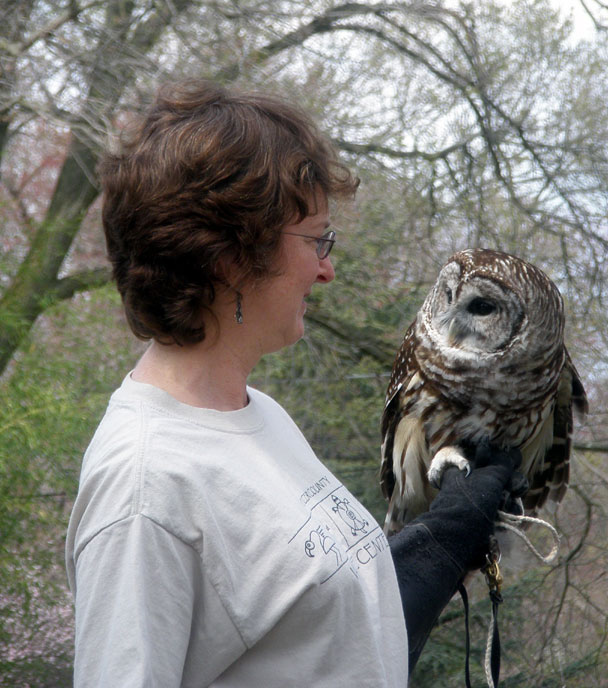
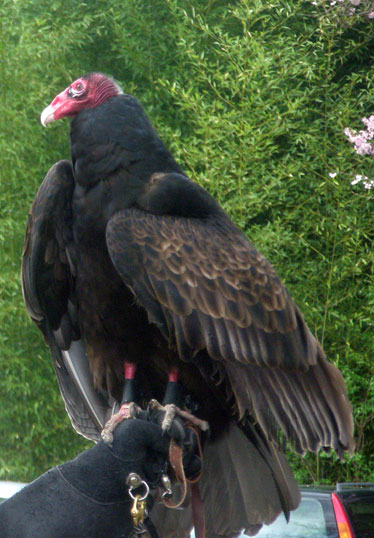
Nancy Derrico, our volunteer from the Mercer County Wildlife Center, shared her extensive knowledge and experience. The four birds who accompanied her vividly illustrated the characteristics of their species, and the range of mishaps that can befall wildlife when our worlds intersect. We learned, too, about the best ways to help sick, injured or orphaned wildlife.
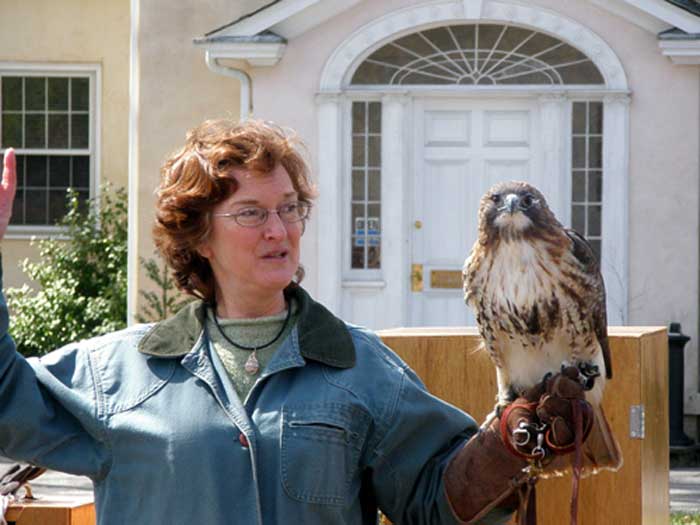
This red-tailed talk, perched on the gloved hand of Nancy Derrico, is a perfectly healthy specimen of its species, but has been a long-time resident at the Wildlife Center because it became imprinted to human beings as a young bird.
For those who wish to support or get involved with the Mercer County Wildlife Center, many options are offered at http://nj.gov/counties/mercer/about/community/wildlife/help.html