|
PAST EVENTS
Audubon Christmas Bird Count
Sunday, December 17, 2023
Thank you to our counters: Karen Linder, Louis Wilkens, Mark Peel, Anne Zeman, Rakesh Kumar and Zion, with a special shout-out to Field Ornithologist
Dan Froehlich of Poulsbo, Washington, who provided afternoon count data for Heathcote Preserve and observed one of the two pileated woodpeckers seen in
this year’s count.
All told, the group walked 10.6 miles, observed 42 different species and counted 1931 individuals in various parts of the open space
in Kingston. The day was misty and 40 to 50 degrees, a relatively nice day for counting birds. The most notable feature of this year’s count were the
robins, vast flocks of them, zooming from branch to branch and chowing down on Callery pears and honeysuckle berries. The counters in Mapleton Preserve
stopped counting after 950 birds, as they could not tell which birds had already been counted.
Our local eagles appear to have a new nest. An adult bald eagle was observed at 9:30 am on the day of the count. Their previous nest, in a white pine
close to the D&R Canal, seems to have fallen to the ground. Attempts to shore up the spot with timbers have been ignored by the birds, who seem
to be trying again in a mighty hardwood tree on the “Seminary” side of Mapleton Road. Let’s hope they have better luck this time! Evening calls from
two great horned owls and a screech owl near Basin Street rounded out the count.
CBC 2023 Results--Kingston
KGA Annual Meeting and Program: Thinking Outside the Box about Your Woods and Bogs: How Private Forestry Practices Can Protect Rare Turtles
Wednesday, November 29, 2023 on Zoom
Turtles are well-known for their longevity. The oldest member of this group (a Seychelles giant tortoise named Jonathan) celebrated his 191st birthday
earlier this year! While a long lifespan is certainly a credit, it also lends a false sense of security when it comes to the stability of a species. High
density does not equal “healthy” if young individuals are not rejuvenating a population.
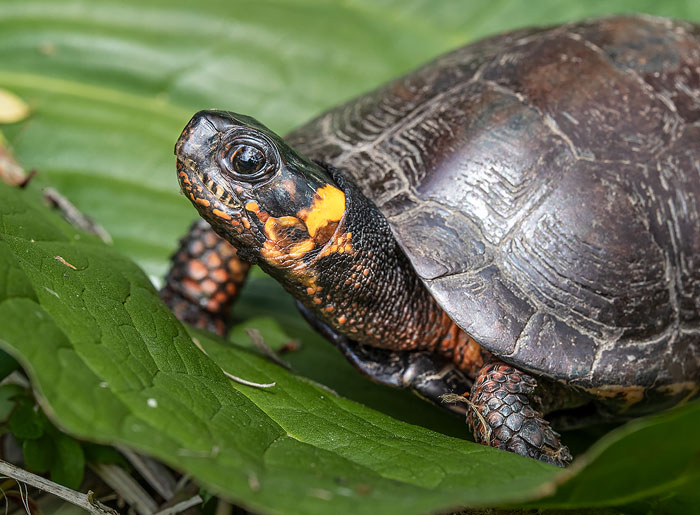
Bog Turtle, photo by Eric Sambol
New Jersey has been proactive in protecting native turtles through state law, but since much of the remaining habitat available for our rarest species
occurs on private property, landowner collaboration is essential for their continued survival. During this talk, Conserve Wildlife Foundation of New
Jersey (CWF) biologist Christine Healy, introduced us to three of our local turtles (box, wood, and bog), discussed management strategies that can be
employed in our forests and wetlands to benefit them, and shared resources that provide financial and technical support to turtle champions.
Christine Healy's full presentation is highly recommended, and is now available on youtube:
Christine Healy on NJ's Rare Turtles
FALL FOLIAGE WALK--"Seeds, Nuts, and Whirlygigs"
Saturday, October 21, 2023
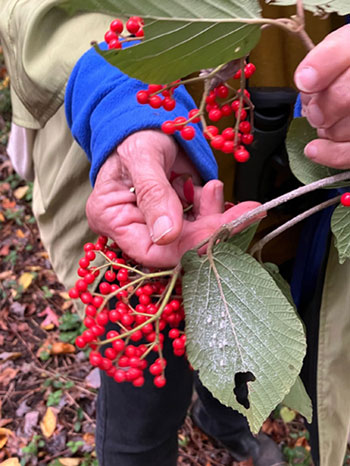
Karen Linder led an absorbing and educational walk through the Mapleton Preserve. We examined the multiple mechanisms that trees have evolved to survive
and replicate. Fall colors were particularly and vividly beautiful following a good rain and favorable temperatures the week before.
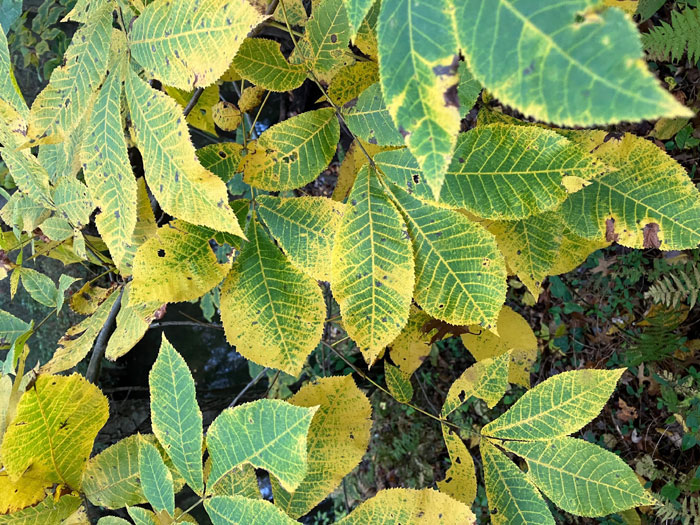
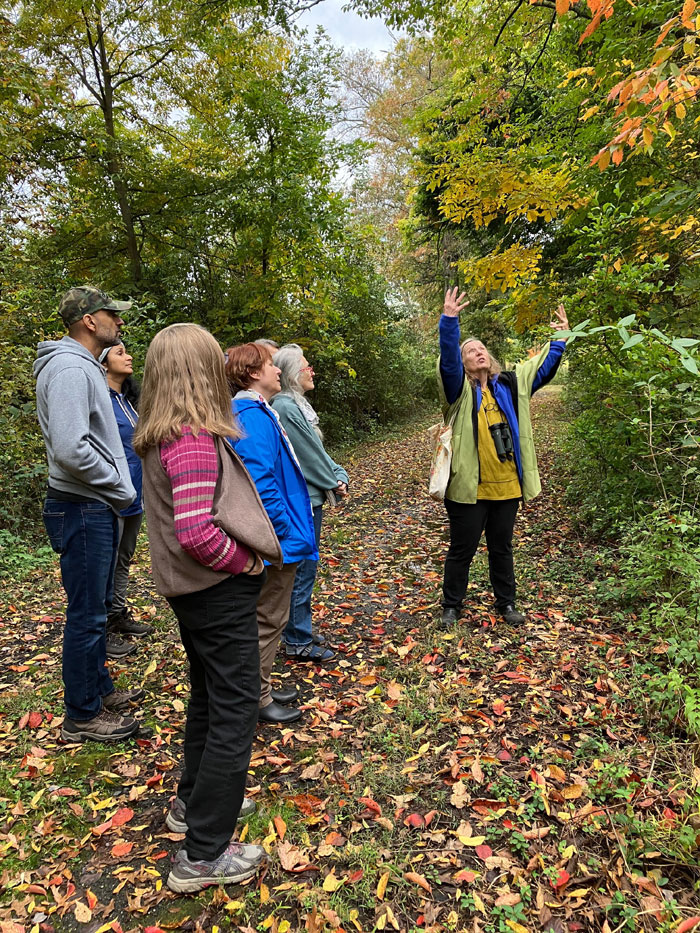
Photos by Boël Denne-Hinnov
BLUE MOON WATCH
Wednesday, August 30, 2023

Although the moon was obscured by clouds and trees as it was rising, it was a beautiful early evening in Heathcote Park. The air was pleasantly warm, and
insect choruses serenaded an appreciative gathering. Those of us who continued to watch the night sky from home were rewarded with the spectacle of a
glorious moon almost too bright to view with the naked eye.
Earth Day Cleanups
Saturday, April 22, 2023
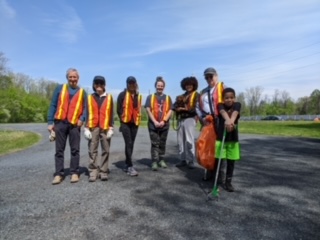
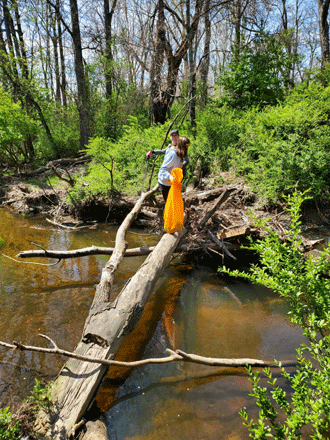
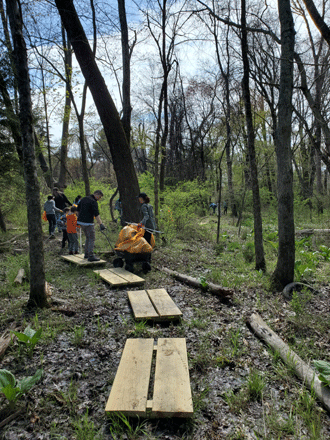
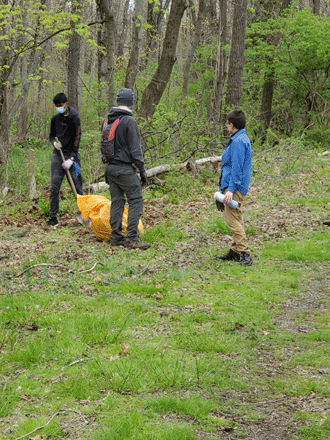
The hearty morning corps of volunteers cleaned up around Rockingham and along Laurel Avenue on the Franklin Township side of Kingston, while
the afternoon crew focused on litter in Mapleton Preserve and roadside trash along Ridge Road and Division Street on the South Brunswick side.
Our warm thanks to all who participated in making our community cleaner and safer!
AUDUBON CHRISTMAS BIRD COUNT
Sunday, December 16th, 2022
The counting area for this year’s Audubon Christmas Bird Count CBC) included Mapleton Preserve and seedbeds, the upper nursery, Heathcote Farms, and the
Cook Preserve. Some highlights included a calling red-shouldered hawk, a raptor that has been seen (and heard) multiple times near Basin Street in
recent years. Hear their call, and learn more at Red-shouldered Hawk
Red-tailed hawks were well represented, with 8 seen on the count day, including an amorous pair sitting close to one another on a tree branch. The “best
bird of the day” had to be a lovely male Northern harrier; a slim grey bird with a long banded tail, who was gliding low over the seedbeds looking for
breakfast.
One of “our” eagles was spotted in a tree, not far from the Canal. Both birds have been observed at their nest on Mapleton Road. According to
NJDEP, in 2022 this pair fledged two chicks, adding to the total of 335 eaglets raised in New Jersey last year, from 250 active nests. This is a dramatic
comeback from the 1970s and 1980s, when, due to widespread use of DDT, the New Jersey eagle population was reduced to a single pair in a remote part of
Cumberland County.
There were a lot of flickers (9) and blue jays (22) observed, and more juncos (28) than we saw last year. However, no yellow-rumped warblers were found,
for the third year in a row. Cedar waxwings were absent as well, although close to 100 robins were seen eating holly, callery pear and bittersweet near
Ridge Road. A flock of 22 turkeys was also seen.
Click here to see the full count results: CBC 2022
Many thanks to our counters this year!
DOUG TALLAMY ON THE NATURE OF OAKS
Wednesday, October 5, 2022 on ZOOM
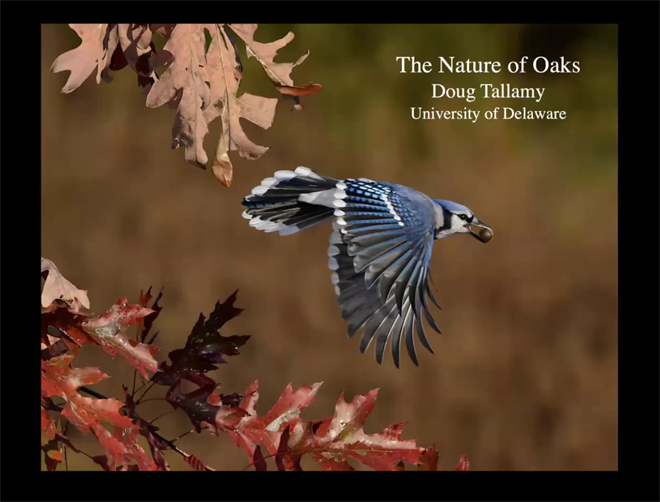
Professor Tallamy's webinar is now available on youtube: Doug Tallamy on The
Nature of Oaks
Did you know...
Oaks are the best soil stabilizers?
Oaks and blue jays evolved together?
Oaks make great street trees?
Oaks' excellent leaf litter protects soil communities?
Learn more about these incomparable trees and the tremendous diversity of life they support!
Doug Tallamy is the T. A. Baker Professor of Agriculture in the Department of Entomology and Wildlife Ecology at the University of Delaware, where he has
authored 106 research publications and has taught insect related courses for 41 years. Chief among his research goals is to better understand the many
ways insects interact with plants and how such interactions determine the diversity of animal communities.
His book Bringing Nature Home was published by Timber Press in 2007, The Living Landscape, co-authored with Rick Darke, was published in
2014; Nature's Best Hope, a New York Times Best Seller, was released in February 2020, and his latest book The Nature of Oaks was released
by Timber press in March 2021.
In 2021 he cofounded Homegrown National Park with Michelle Alfandari. His awards include
recognition from The Garden Writer’s Association, Audubon, The National Wildlife Federation, The Garden Club of America, and The American Horticultural
Association.
|
SUNDAY EVENING WALK IN HEATHCOTE MEADOWS
Sunday, August 21, 2022
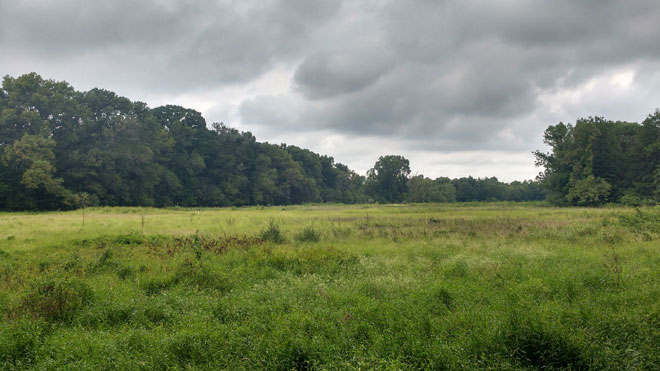
Photo by John Keisers
Light breezes and a mild temperature favored our group on this leisurely walk through Heathcote Meadows. Late summer grasses, boneset, goldenrod, milkweed,
Queen Anne's lace, virginia creeper, New York ironweed, coppery curly dock, horse nettle, mountain mint, tick trefoil, rosy camphor-weed, and fleabane
were plentiful, along with less welcome plants like mugwort, Chinese bush clover, and poison ivy.
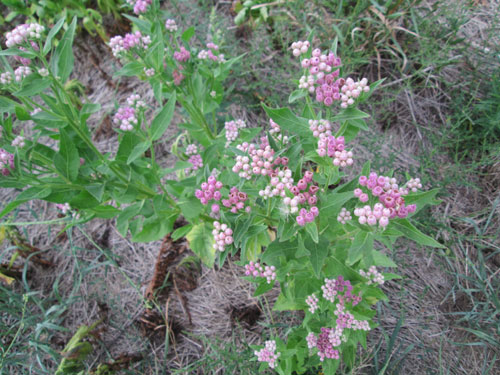
Camphor-weed
Bird activity was light, but we were graced with two flyovers by a Great Blue Heron, and scattered bluebirds. All in all, a lovely walk!
EARTH DAY CLEANUPS
Saturday, April 23, 2022
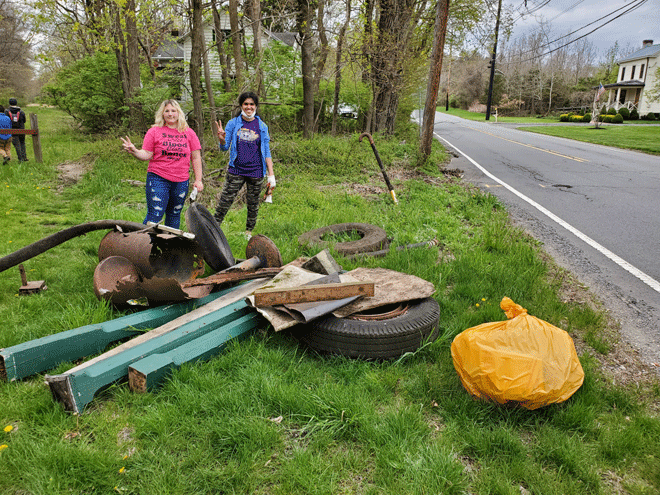
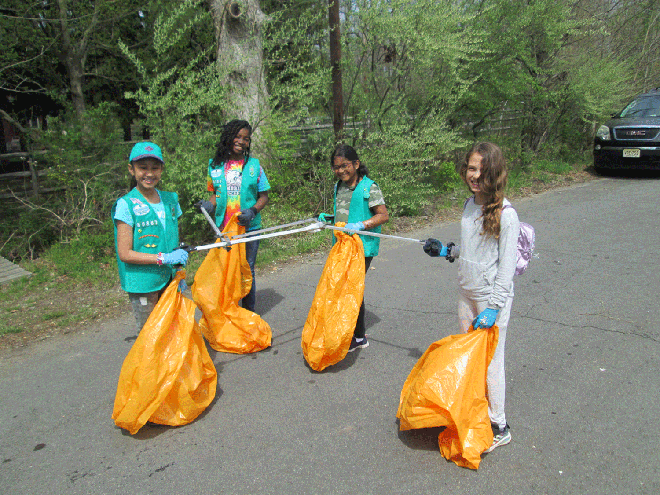
Fine weather and a robust turnout on both the Franklin and South Brunswick sides of Route 27 resulted in one of the best Earth Day cleanups ever!
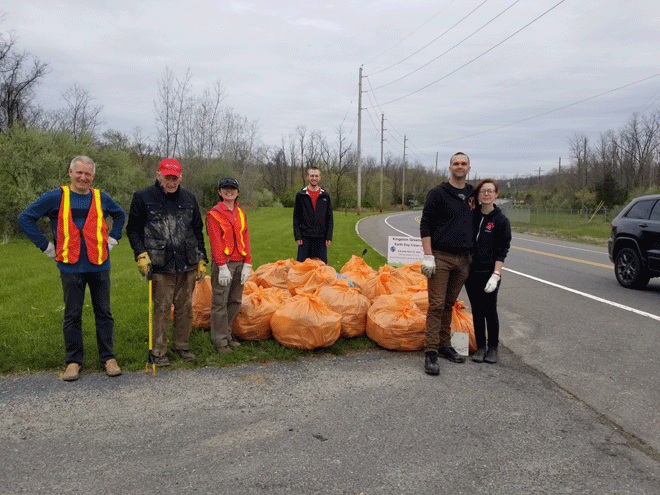
Above, volunteers at the morning session collected 20 bags of trash near Rockingham Historic Site and along Laurel Avenue.
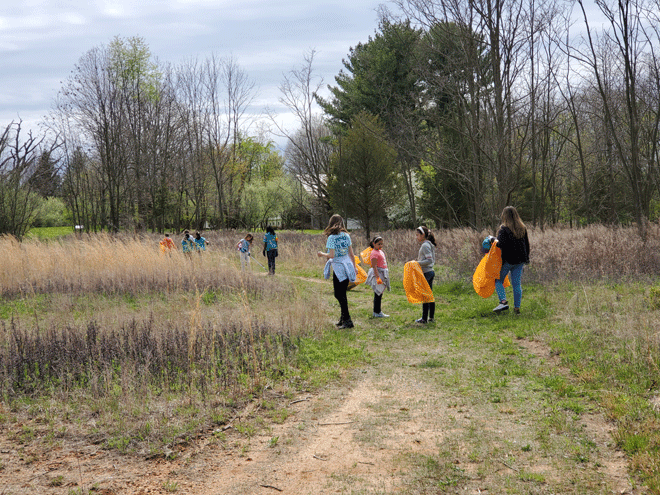
Below, afternoon litter collectors found plenty to fill their bags in the Mapleton Preserve (including the new "Blue" Trail, to be officially opened on June 4th,
National Trails Day), on the Rail Trail, and along Ridge Road and Division Street.
Photos by BreeAnne Lemmerling
|